Consumers are bleating for more wool

The following is a 5/27/2026 story by Marketplace.org’s Kai Ryssdal, Sarah Leeson, and Livi Burdette.  Read on for encouraging news from the “fiber side” of sheep raising!  If you prefer, click to listen here.

While buyers are willing to shell out a bit more if the item is made with organic or sustainable products, that interest doesn’t go very far if the supply doesn’t exist. For instance, buyers on the hunt for wool products might be out of luck.

Stepan Sveshnikov wrote in Offrange about why demand for wool is up — fears around microplastics in clothing and concerns about sustainability are two reasons. Sveshnikov joined “Marketplace” host Kai Ryssdal to talk about how the industry is working to ramp production to meet the desire for natural fibers.

Below is an edited transcript of their conversation.

Kai Ryssdal: I’m just going to read you the first line of this piece, which you know, of course, since you wrote it. But then we’re going to talk about it, because it contains multitudes here. “The U.S. wool industry,” you write, “is staging a comeback. So, where are all the sheep?” First of all, talk to me about wool and this comeback, because clearly I missed that.

Stepan Sveshnikov: Yeah, well, I’m not surprised you’ve missed it, but there’s a group of people who’s interested in wool, Kai, and I think that that group is growing. Wool answers three concerns that are prominent, and I think you’ve heard about these concerns. One is a health concern about the microplastics in our clothes. There’s a growing body of research that’s showing that that might be affecting us in ways we don’t like. Now, if you’re talking about wool socks or wool underwear—and they even make wool bikinis now—those aren’t going to have any microplastics in them. The second concern is environmental, and I’m talking about oil, which has been in the news. Those plastic clothes, they’re made from polyester, and polyester is made from crude oil, so we’re talking about a group of people who are concerned about the environment, and wool is a lot more sustainable than oil. And the third thing is ethical. In the news recently, there’s been some talk about polyester recycling. When you recycle old clothes, they go off to places like India, and the dust from those recycling operations is making people sick. I think wool actually is able to answer those concerns. And as there are more people who are worried about these things, they’re starting to buy wool products.

Ryssdal: Okay, here comes the second part, then, of your first question. Where are all the sheep? You actually say there’s not enough sheep in the world to meet all of our demand.

Sveshnikov: No, there’s not enough sheep in the world, not even in big wool-producing countries like Australia, and in the U.S., the situation is especially bad. But surprisingly, the farmers and industry people I talked to were optimistic, so they felt like we’ve hit rock bottom, but there’s room to start bringing some sheep back.

Ryssdal: The catch, of course, is that — and look, I don’t know much about sheep procreation, but I imagine it takes, I don’t know, a couple of years for sheep to get to the point where it can be sheared and wool can get into the supply chain.

Sveshnikov: That’s the problem. Yeah, so Christa Rochford, who’s the wool marketing program manager at the American Sheep Industry Association, she told me that it’s not like you can rebuild the American herd overnight. You can’t just come up with breeding stocks. So, demand is spiking, which, of course, is great for farmers, because the price for wool goes up, but then they’re not going to be able to double their herd size overnight.

Ryssdal: There’s another part of this infrastructure that you talk about, and it’s not just the livestock, it’s mills and places where you can go to get your wool — what is it, combed and spun? I mean, I forgot all my fifth grade history stuff, but you’ve got to do stuff to get wool to a place where it can be used.

Sveshnikov: Yes, you do, and there’s so many steps. You’ve got to shear it, wash it, comb it so all the fibers are straight, spin it into yarn, and then that yarn gets woven into a textile, and the textile still has to be sewn into clothing, and those are just some of the steps. In the U.S., right now, there are probably only about five mills left that can complete all of those steps.

Ryssdal: Alright, so, look, as I said in the introduction, you’re a contributing writer, but also you’re a PhD student in history. So, apply your analytical history lens here and tell me where this goes now.

Sveshnikov: I think we’re going to see some more investment in infrastructure. It’s going to be slow, and a lot of it is going to come from unexpected places, but you know, I talked to a guy named Chase Hill in Idaho, who’s, oh, he must be in his late 20s, maybe early 30s. He started an organic wool pillow company, and it’s all made in the USA. His cotton is from Texas, and his wool is from Montana. He wasn’t happy with the infrastructure, so he actually bought a wool mill this year, and he’s bringing more production in-house. So look, it’s an uphill battle, but there are people doing it, and I think it’s going to grow.

Experience Wool Now on YouTube

The American Wool Council has provided fans of the all-natural fiber with a new way to Experience Wool through the creation of a YouTube page. The page currently hosts three videos produced by Brand Juice in the past year to market American wool to a wide variety of consumers.

The videos were shown on multiple occasions during the American Sheep Industry Association Annual Convention last month in New Orleans, and can now be shared from the YouTube page by producers looking to promote American wool and its many benefits.

In The Luxurious Fiber, a narrator explains that the “Fabric designers choose first to achieve pure elegance, absolute luxury and unmatched style” is American wool.

The High Performance Fiber is aimed at more demanding users and offers, “There’s one time-tested, expedition-proven material you can count on. One fabric for four seasons. Experience the confidence of American wool.”

Natural and Sustainable promotes what might be the fiber’s greatest trait. “What this miracle becomes is infinitely remarkable, versatile, beautiful and in the end, sustainable.”

If you haven’t seen them yet, check out the videos. Share them with your friends, family and clients, and help the American Wool Council in promoting this natural, renewable, sustainable fiber that is perfect for any occasion in any season.

Access the YouTube Channel:   https://www.youtube.com/channel/UCFhONGmym_OM8ZWxPqw9Fag

For more information on American wool, visit AmericanWool.org or follow Experience Wool on Facebook, Instagram and Twitter.

Source: ASI Weekly February 8, 2019

Links Update February 1, 2024

‘Shop local’ drives sales of American-made yarn

Source:  https://www.morningagclips.com/shop-local-drives-sales-of-american-made-yarn/


Youth Ambassador Program

The Garden State Sheep Breeders organization is proud to announce the introduction of the Garden State Sheep Breeders Youth Ambassador Program. Part of our  mission as stewards of the sheep community is to develop and grow our sheep leaders of tomorrow. The program’s goal is to empower the selected candidate with the knowledge, skills and aspirations necessary to develop them into an effective advocate for the Garden State Sheep Breeders. The program will seek to strengthen and expand upon the chosen candidate’s leadership abilities so that they may serve as a positive role model while promoting sheep, build meaningful relationships and support the sheep industry.

For details and an application see the Youth Ambassador Program page.

Valais Blacknose Sheep Introduced in North America

http://valaisblacknosesheepsociety.co.uk/wp-content/uploads/2015/07/image11.jpeg

The Valais Blacknose Sheep Association of North America announces the successful launch of a “breed up program” for introducing the breed to North America. The first generation of lambs are being born in 2018.

For centuries, the Valais Blacknose sheep were found only in Switzerland on the remote snow-covered peaks of Valais. Although the sheep are believed to have existed since the 15th century, it became a breed recognized by the Swiss Sheep Breeding Association in the mid 1960’s as the Walliser Schwarznasen or Valais Blacknose because of its unique markings. Several hundred were exported to the United Kingdom in 2014. The breed’s wool is considered ideal for carpets, bedding and felting.

The Blacknose Sheep Association of North America was formed in 2017 to support the introduction of the breed to the United States and record the offspring of the breed up programs already in progress.

For more information, on how to purchase the frozen semen of the Valais Blacknose Sheep, as well as general information on the breed, contact the Teton Blacknose Sheep Company at info@tetonvalas.com, www.tetonvalais.com or 561-309-1402.


Article Source: ASI Weekly March 23, 2018

https://www.sheepusa.org/Newsmedia_WeeklyNewsletter_2018_March_March232018_ValaisBlacknoseSheepIntroducedInNorthAmerica

Photo Source: http://valaisblacknosesheepsociety.co.uk/wp-content/uploads/2015/07/image11.jpeg

Soil Health Enables Climate Beneficial Wool

Rancher Benefits in Multiple Ways from Soil Health

What if, before you purchased a hat or sweater, you knew the wool used to make it came from sheep raised on a ranch managed to improve soil health and increase soil carbon? For nearly a decade, ranch owner Lani Estill has worked with the USDA Natural Resources Conservation Service to improve soil health.

By adding carbon-conscious conservation practices to her ranch, the operation now stores more carbon in the soil than it emits through its operations. As a result, her operation, Bare Ranch, is marketing “climate beneficial” wool to a national clothing manufacturer. Estill and her family raise sheep and cattle on her 40,000-acre ranch, which sits on the border of northern California and northwest Nevada.

With help from her local NRCS offices and supported by Environmental Quality Incentives Program contracts, Estill has also improved wildlife habitat on her ranch. She improved sage grouse habitat by removing thousands of acres of invasive juniper and installed hedgerows for pollinators. She and her co-owners also installed fencing and livestock watering facilities and are following a prescribed grazing management plan.

Read the full story at www.usda.gov/blog.

Source: ASI Weekly March 9, 2018
 

Ohio State Extension Rebuilds Sheep Team Blog

Shepherds now have a place to find all the latest information on sheep production, industry research conducted at Ohio State, and daily management tips. The recently rebuilt The Ohio State University Extension Sheep Team blog page can be found at http://u.osu.edu/sheep/.

The site is managed by Sheep Team Program Coordinator Brady Campbell and includes contributions from the more than 25 Ohio State faculty and staff who each have unique interests in sustaining the sheep industry. Once at the site, readers will find current management information, a listing of upcoming events, research summaries and a library of resources.

Women Shearers Featured in Vogue

“I was always acutely aware that there were less women shearers,” photographer Nich Hance McElroy said of photographing women shearers up and down the West Coast for Vogue. But last year, when he began shearing on commercial crews for a shearer and sheep rancher named Robert Irwin, McElroy noticed more and more women working on flocks – many who Irwin actively recruited. Some were already farmers or gardeners themselves, some were tech professionals in the Bay Area with a back-to-the-land mind-set, some were part-time knitters who wondered why it was next to impossible to find local wool. McElroy began photographing them, too.

“I really think, going forward, it’s going to be women doing farm work,” Irwin told me recently by phone from California. “The last five years or so, teaching guys to do this stuff, a lot of them just don’t have the mentality of waking up and thinking to themselves, ‘I’m going to get better at this.’ The women do. They’re more apt to stick with this; they’re more detail-oriented; they’re tougher.”

Read the story at https://www.vogue.com/projects/13535219/women-sheep-shearers-california-oregon-photographs-nich-mcelroy/.

APHIS No Longer Providing Free Plastic Scrapie Tags

To support animal disease traceability and scrapie eradication efforts, the United States Department of Agriculture’s Animal and Plant Health Inspection Service has provided both metal and plastic ear tags and applicators to sheep and goat producers – at no cost – since fiscal year 2002.

After a funding reduction in FY 2012, APHIS used specific, no-year funding (for scrapie and ADT) to continue purchasing the tags and distributing them free of cost to producers. These no-year funds were exhausted in fiscal year 2017. While the Agency remains committed to ADT efforts, beginning Oct. 1 of this year, APHIS is providing only metal tags free of charge to producers and others who handle sheep and goats. Plastic tags and applicators for metal and plastic tags will remain available for purchase directly from approved tag manufactures.

These changes will reduce APHIS tag and applicator costs while still providing sheep and goat producers with a free identification device. APHIS will provide a limited number of plastic tags to producers newly enrolled in the Scrapie Free Flock Certification Program who submit tissues for scrapie surveillance in order to encourage on-farm scrapie surveillance.

The agency will continue to work closely in partnership with states and industry to achieve scrapie eradication.

For more information on how to purchase tags and applicators, visit https://www.aphis.usda.gov/animalhealth/scrapie-tags.
Note: The American Sheep Industry Association and other stakeholder groups continue to work with USDA on alternatives to this new policy, including increasing the appropriations designated to the scrapie eradication program.

South Jersey’s largest sheep farm isn’t where you think it is

Near luxury homes, a Moorestown site raises stock for breeding, wool, and market lambs.

JSHEEP16

DAVID MAIALETTI/ Staff Photographer

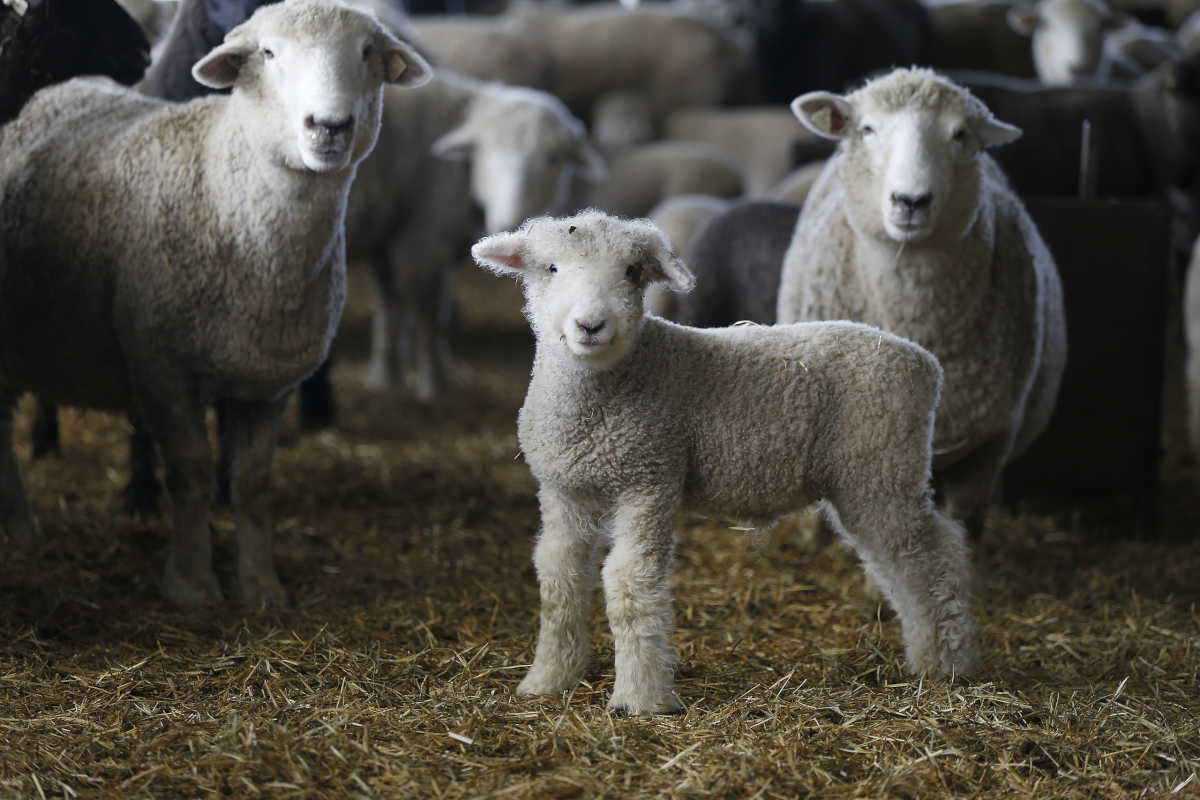
Charlene Carlisle and her husband, Kenny, pose with their lambs and sheep at Little Hooves Farm, which has a flock of about 300, in Moorestown, N.J.

___________________________________________

In the middle of a fast-developing town known for its desirable zip code is a sheep farm believed to be the largest in South Jersey – and you wouldn’t know it’s there.

Little Hooves farm in Moorestown is where a flock of 300 sheep and lambs thrive mostly out of sight, inside three sprawling dairy barns that decades ago held cows. The sheep have been there for more than a dozen years. Sometimes they can be seen on pastures that border a two-lane country road that’s gradually becoming less peaceful.

The farm is among the last in Moorestown.  One reason sheep farms survive is the state’s ethnic diversity, which drives a demand for the meat, state agriculture experts say.  Muslims, Orthodox Greeks, Hispanics, and some Middle East and Asian immigrant communities favor market lamb — especially during the Easter season and other religious holidays.

“Easter is one of our peak times. But it keeps going with Orthodox Easter, Muslim holidays, and even the Fourth of July, when people can roast lamb on a spit or a grill,” said Charlene Carlisle, a part-time intensive-care nurse at Virtua Hospital who operates the Little Hooves farm off Centerton Road.

Nationwide, sheep inventory has been declining for decades, but New Jersey is enjoying a small uptick.  The state had nearly 15,000 sheep in 2012 and was ranked fifth in the nation in the production of market lamb and mutton in 2015, according to the latest U.S. Department of Agriculture figures. Pennsylvania, however, had a decrease in market sheep in 2015.

 DAVID MAIALETTI / Staff Photographer
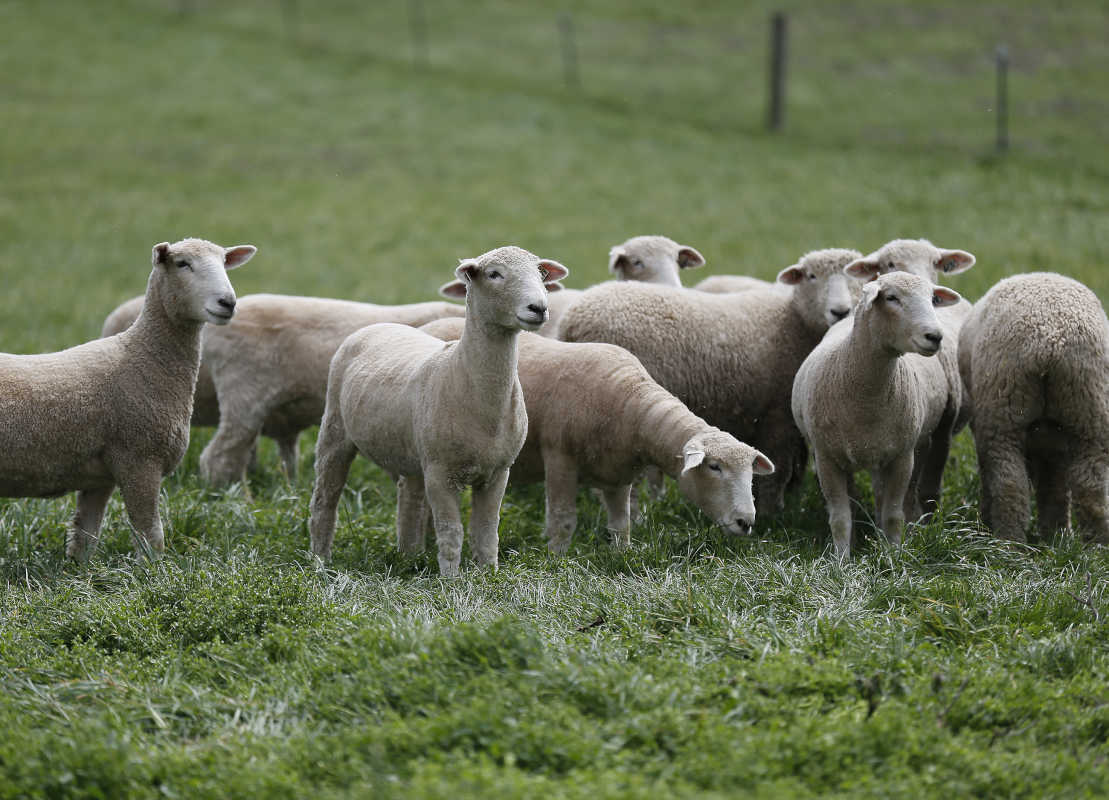
Sheep gather in one of the fields at Little Hooves in Moorestown.

Little Hooves has carved out a niche in Moorestown while other farms have disappeared. But across the street, workers for Toll Brothers hammer away at a new development of luxury homes, the Mews at Laurel Creek.  The 250-acre farm has an executive office campus on one side and community gardens on the other.

This time of year, the farm contributes to the bustle.

Consumers can buy market lambs and wool products directly from the doorstep of the farm or from the nearby Burlington County Farmers Market.

Carlisle tends to the animals, while her husband, Kenneth, grows mostly hay, soybeans, and corn on the acres they lease from the county under a farmland preservation program, and from several landowners.

“I don’t require much sleep,” she said, laughing. Carlisle also said sheep are “fairly easy” to raise since they only need to be fed twice a day.

Carlisle says the new focus on farm-to-fork and fresh, locally produced meats and vegetables has also helped their business grow.  “There’s definitely an increased interest with people wanting to feel connected, wanting to know where their food comes from,” she said, noting she doesn’t give her sheep any hormones.

She sells market lambs to restaurants and to consumers at the farmers market.

The farm also sells prize-winning sheep for breeding and for so-called gentleman’s farms that use small flocks of sheep to get tax breaks.

 DAVID MAIALETTI / Staff Photographer
The Carlisles raise sheep for breeding, wool, and market lambs.

The Carlisles have been farming at this Moorestown site for 30 years, including more than a decade when the couple worked for the Winner dairy farm, which once had 400 Holstein cows on the property.  Now, they raise only sheep, which Carlisle described as more pleasing to residential neighbors who have moved into the area.  “There is less smell and manure, since sheep poop is like rabbit poop,” she said.

Carlisle also markets wool, yarn, and pelts online.

“We’re probably the largest sheep farm around except for the one in North Jersey,” she said.  That farm, Valley Shepherd Creamery, in Long Valley, Morris County, has about 500 milking sheep used in a commercial cheese operation.

Nationwide, there were about eight million sheep and lambs in 1997, and only about 5.3 million this year due partly to decreased demand.  In 1997, New Jersey had 12,900 sheep, and 14,900 by 2012, on 819 farms.

The majority of those farms had fewer than 25 sheep and lambs.  Only a dozen had more than 100.

Among the smaller ones is the Square Key Farm in Pedricktown, Salem County, which has about 70 sheep and lambs.  “I focus on meat lambs that look nice on the table,” said Ed Hall Jr., the owner.  He supplies a few Philadelphia and Delaware restaurants and sells directly to customers who then take the animals to a butcher.

“I’m not struggling, because it’s a unique market,” Hall said.  There also are challenges.  Hall won’t be able to capitalize on the Easter market this year because his ram became sterile and his lambs were born too late.  “I’m not rich, but I’m paying my bills and I’m happy and doing well,” he said.

Dan Wunderlich, a New Jersey Department of Agriculture livestock specialist, said the state had the distinction of being fifth in the nation in the number of sheep and lambs that were slaughtered in 2015 in federally inspected facilities and then marketed.  There were 126,000 market sheep in that category, up 5 percent from the previous year.

That number, the latest available, represents sheep raised in the state for meat along with those imported from other states.

New Jersey “has the market, and the population, and ethnic diversity and relies on Pennsylvania, New York, Delaware, and Maryland for a supply of live animals,” Wunderlich said.

In 2015, Pennsylvania processed only 61,100 sheep for meat, a 15 percent decrease from the previous year, the USDA reported.  Wunderlich said that state likely exports many of its sheep to states like New Jersey that have the diversity and the customers.

Currently, New Jersey has 13 federally inspected sheep and lamb meat processing facilities.  Catelli Brothers in Camden is among them.

Wunderlich said a growing number of farmers also deal directly with consumers, who may take the animals to butchers or a non-regulated facility.  Muslims sometimes purchase the lambs and take them to a special halal butcher.

 As for wool products, Wunderlich said they provide “less of a boon” because consumers often purchase synthetics and washable fabrics.

Carlisle said her wool is sold mostly to consumers interested in warm blankets and others interested “in getting back to natural fibers.”

She said the county farmers market, which opened about 10 years ago, also has helped give her business a financial boost. It is open only on Saturdays, in the summer.

“It gives us a way to educate the public,” she said.

Source: https://www.philly.com/philly/news/new_jersey/New-Jersey-Sheep-farmers-Easter-immigrants-lamb-Moorestown.html

Save